![[STUDY] Can Undetectable AI Bypass Grammarly's AI Detector?](/static/images/can-undetectable-ai-bypass-grammarly-ai-detectorpng.webp)

What if a text looks completely human to an AI detector but still sounds broken to an actual human reader? That is the uncomfortable question this test raises. AI humanizers are often sold as a shortcut: paste AI text in, get safer-looking writing out. But students do not only need a lower AI score. They need writing that keeps the original meaning, reads naturally, preserves formatting, and does not introduce strange errors. In this test, Undetectable AI performed extremely well against Grammarly's AI detector, but the rewrites themselves showed a second problem that a detector score alone cannot catch.
TL;DR
- Undetectable AI was very effective at bypassing Grammarly's AI detector in this 100-sample test.
- 96 out of 100 rewrites received a perfect 100% human score after converting Grammarly's AI scores into human scores.
- The average human score was 98.99%, and the median score was 100%.
- The lowest human score was still 58%, meaning every sample leaned more human than AI after conversion.
- However, the rewrites were not always clean. A manual scan found visible rewrite problems in 44 out of 100 samples.
- 43 of those flawed rewrites still received a perfect 100% human score, which shows why detector results should not be treated as a quality check.
Also Read: Can Undetectable AI Bypass Turnitin? A 100-Sample Test Students Should Read Carefully
How was this test done?
The test used 100 rewritten samples. Each sample had an original version, an Undetectable AI rewrite, and a Grammarly AI detector score. Since the detector gives AI scores, the scores were converted into human scores. In this setup, a higher number means Grammarly judged the rewritten text as more likely to be human-written.
For example, a human score of 100 means the rewrite looked fully human to Grammarly's detector. A lower score means Grammarly still saw some AI-like pattern. This is simple enough: the closer the score is to 100, the better the bypass result.
Also Read: Can Undetectable.ai Really Slip Past Sapling AI? We Tested 100 Rewrites to Find Out.
How well did Undetectable AI bypass Grammarly's AI detector?
The score results were extremely strong. Out of 100 samples, 96 received a perfect 100% human score. Only four samples scored below 100, and those scores were 58%, 68%, 86%, and 87%. The average score was 98.99%, which is very high for a detector-bypass test.
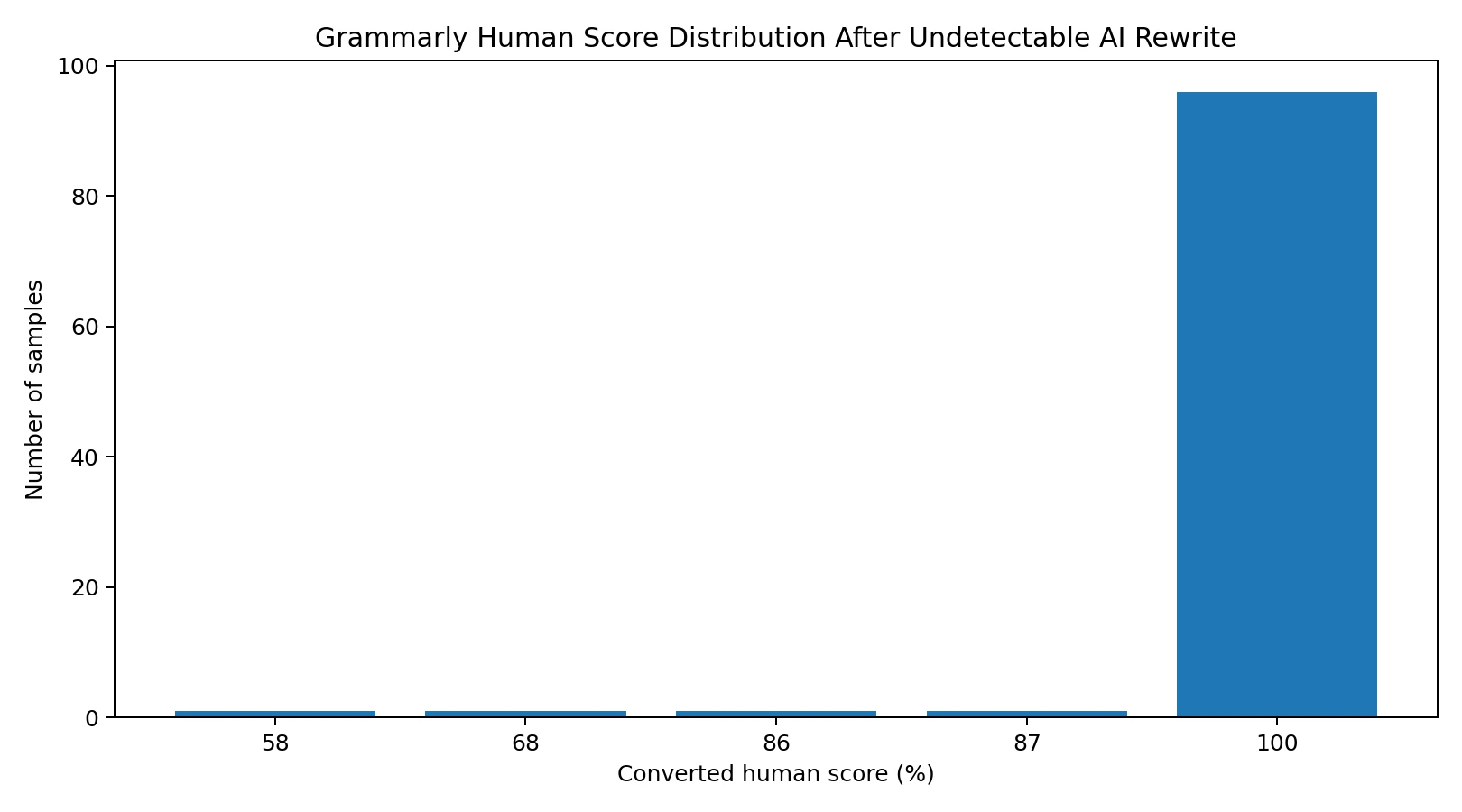
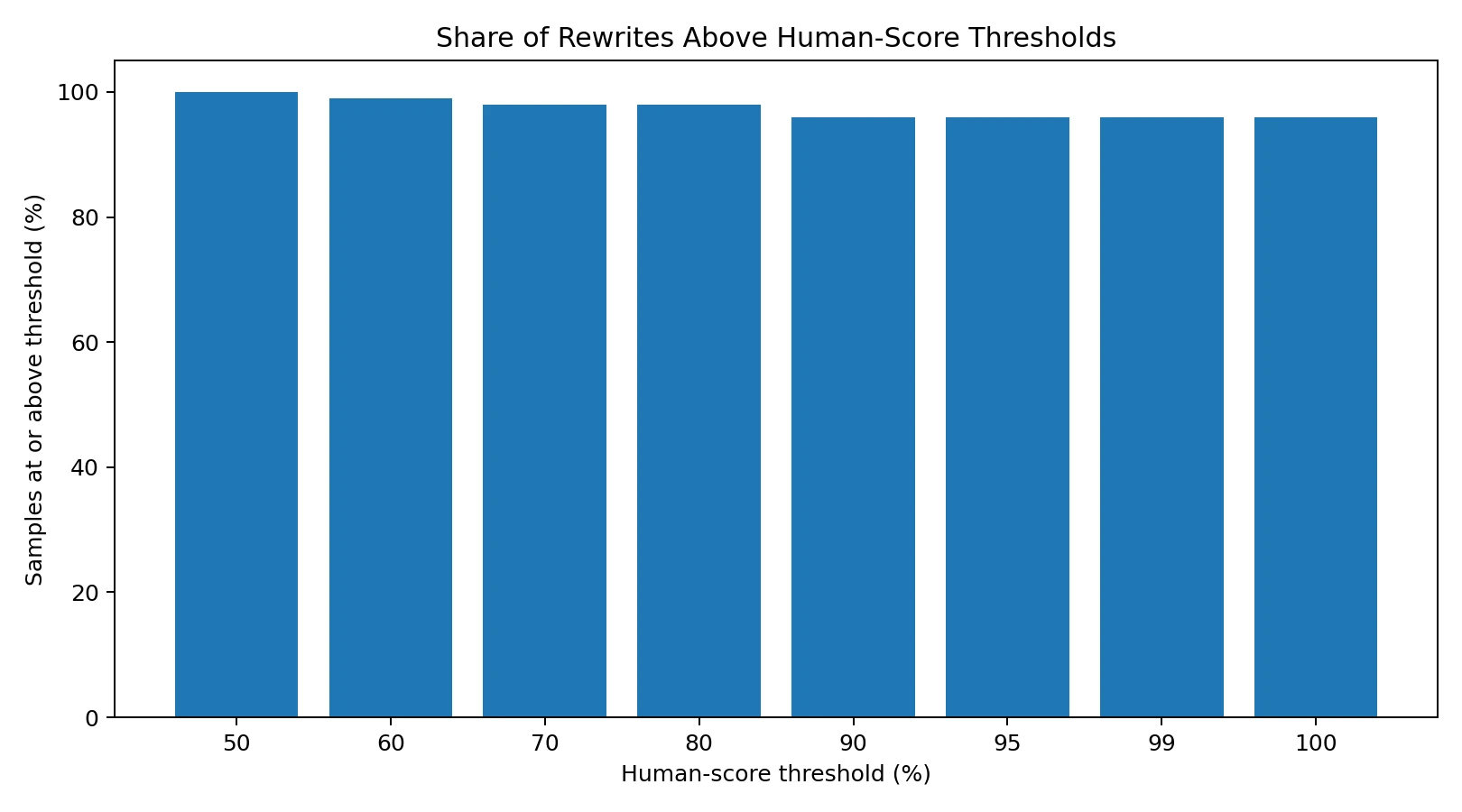
The threshold view makes the result even clearer. All 100 samples scored at least 50% human. 99 samples scored at least 60% human. 98 samples scored at least 80% human. 96 samples scored at least 90% human. For anyone only looking at the AI detector number, Undetectable AI looked highly successful.
Does a high human score mean the rewrite is good?
No. This is the most important part of the test. Grammarly's detector score and actual rewrite quality were not the same thing. A detector can say a rewrite looks human, while the sentence itself still contains broken grammar, awkward wording, missing logic, or meaning drift.
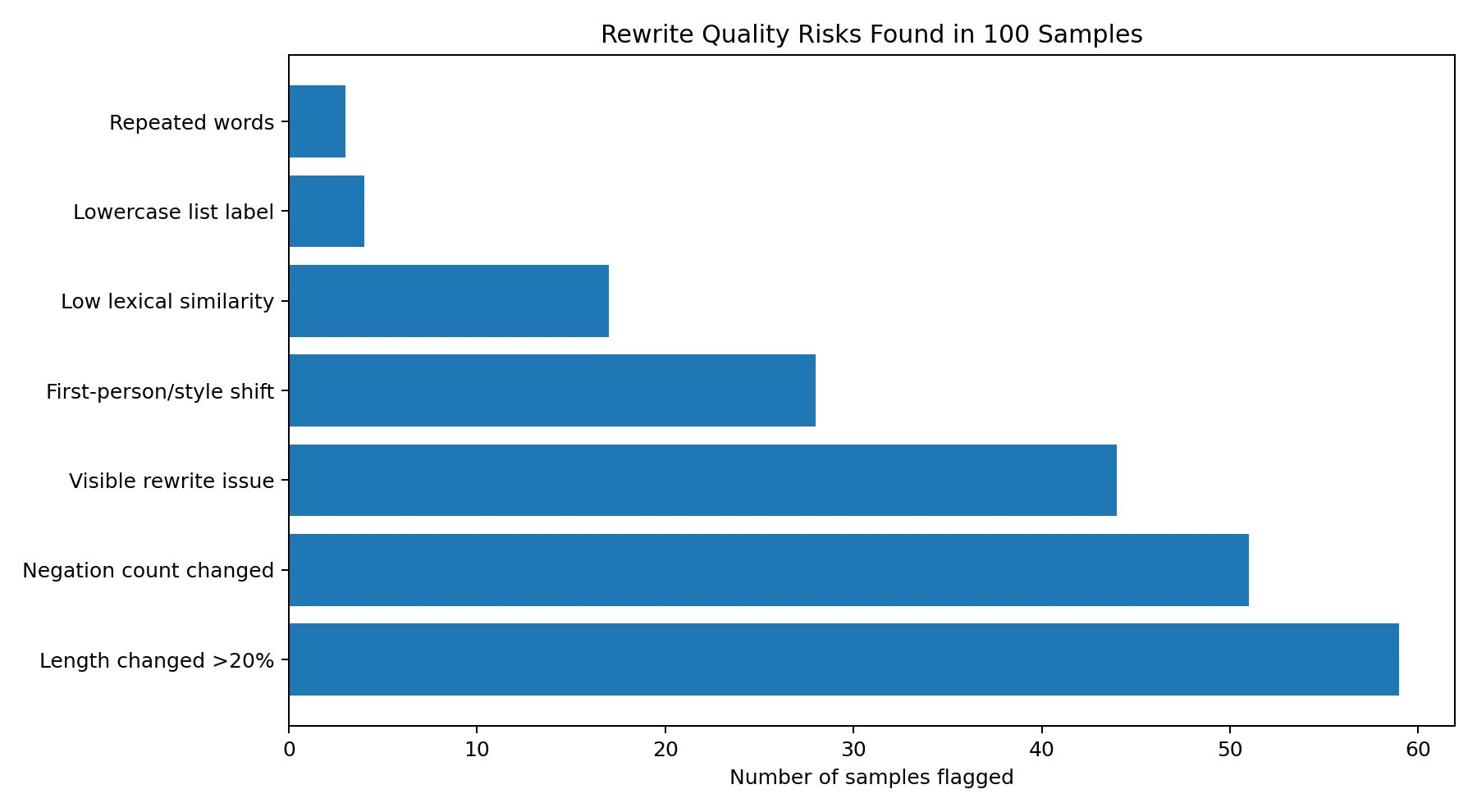
In the manual review, 44 out of 100 rewrites had at least one visible issue. Some were small, but others were serious enough that a student should not submit them without editing. More importantly, 43 of those issue-containing rewrites still scored 100% human. That means the detector was fooled even when the writing had clear human-visible flaws.
Also Read: [STUDY] Can Undetectable AI Bypass GPTZero? A 100-Sample Reality Check
What rewrite problems appeared in the samples?
The problems were not limited to one type. They appeared across grammar, formatting, meaning, and readability.
- Broken grammar and gibberish: Some rewrites produced sentences that were hard to understand, such as phrases like “The them to over heat” or “A the railways.” These are not minor style issues. They make the text look careless.
- Formatting damage: Some numbered sections kept the number but broke the heading, such as “1. your target audience” or “2. driver behavior.” This matters because students often use lists, headings, and structured answers.
- Meaning drift: Some rewrites changed the point of the original text. One Amazon Prime rewrite changed a general “over the years” statement into “launched about a few years ago,” which changes the timeline. A prime numbers rewrite also distorted the explanation by saying breaking large numbers into factors “is what prime numbers are.”
- Unwanted point-of-view changes: Some neutral articles became personal, adding “I,” “we,” or “our” where the original did not use that style.
- Repetition and word glitches: A few rewrites had obvious repeats such as “high high,” “low low,” or “The The Moon.”
- Awkward additions: Some rewrites added extra claims, examples, or phrasing that made the paragraph longer but not necessarily better.
Did Undetectable AI change the length of the writing?
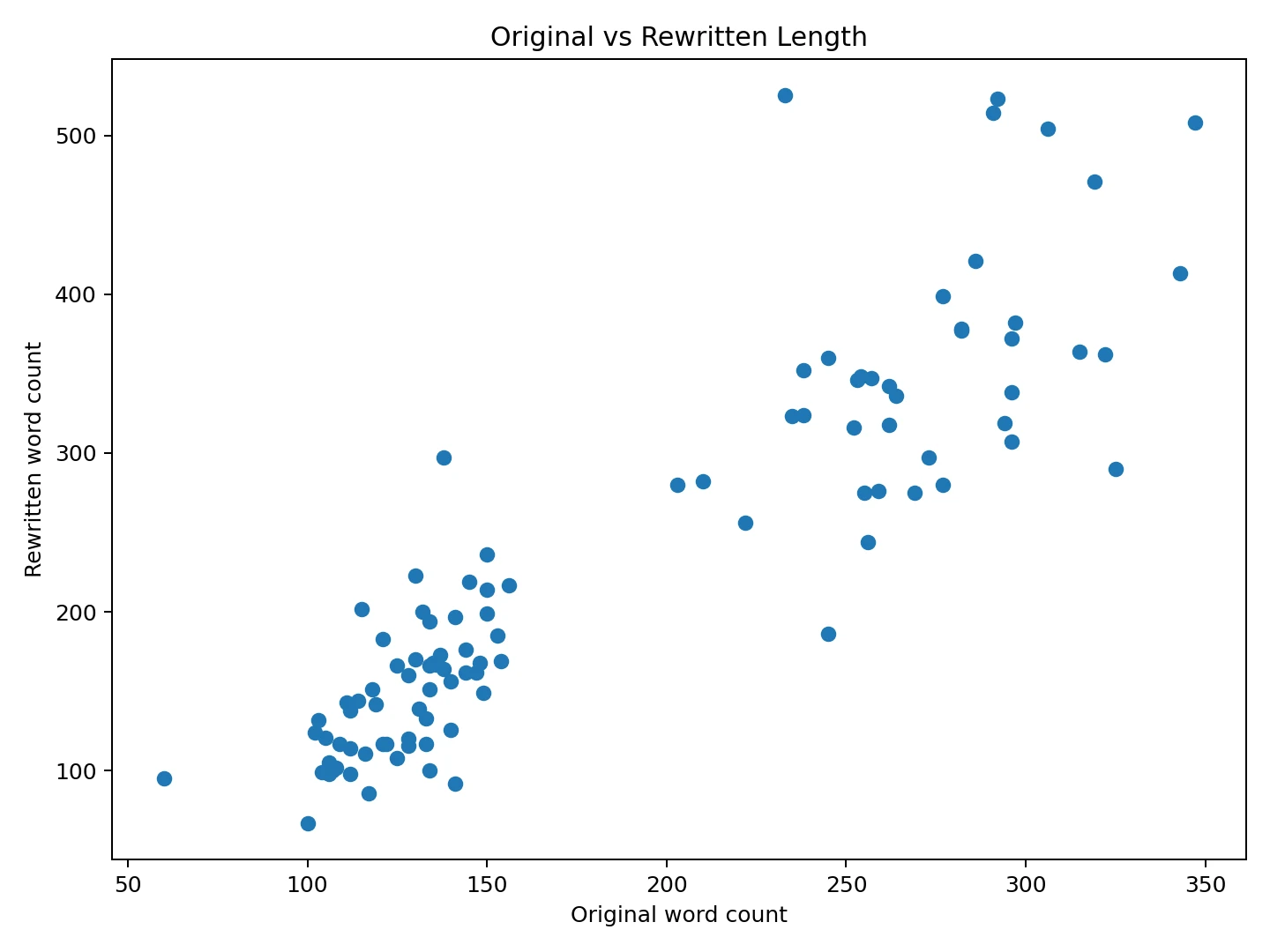
Yes. On average, the rewritten text was about 24.55% longer than the original. That is not automatically bad, but it creates a risk. A rewrite that expands too much can add filler, repeat ideas, or accidentally change the meaning.
In this dataset, 59 out of 100 samples changed length by more than 20%. 12 samples expanded by more than 50%, while 5 samples shrank by more than 20%. This shows that Undetectable AI was not just lightly polishing the text. It often rebuilt the writing heavily.
Also Read: [STUDY] Can Undetectable AI Bypass Originality AI? A 100-Sample Reality Check
What does lexical similarity tell us?
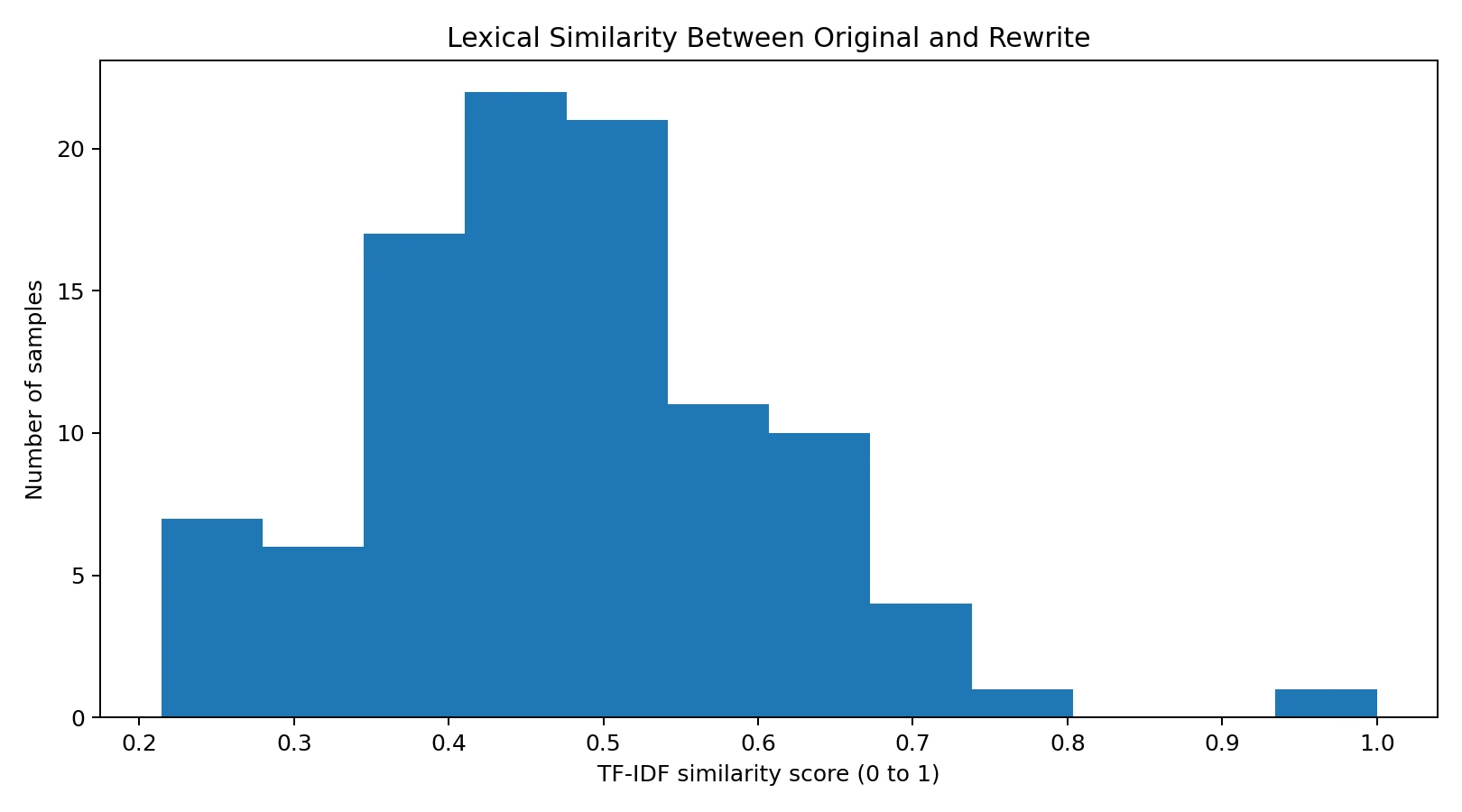
I also checked lexical similarity, which simply means how much the original and rewritten text still overlap in wording. This is not a perfect meaning test. A rewrite can use different words and still mean the same thing. But a very low similarity score is a warning sign, because it suggests the rewrite moved far away from the source text.
In this test, 17 samples had low lexical similarity below 0.35. These are the samples that deserve extra human review because they are more likely to contain meaning drift, missing details, or unnecessary additions.
So, is Undetectable AI effective against Grammarly's AI detector?
Yes, based on this 100-sample test, Undetectable AI was highly effective at making rewritten text look human to Grammarly's AI detector. The detector-score result is not close or debatable: 96% of the samples got a perfect human score, and the average score was nearly 99%.
But there is a big catch. The tool did not consistently produce clean, trustworthy rewrites. A student who only checks the detector score may miss broken sentences, formatting problems, and meaning changes. That is risky because teachers, editors, and readers do not grade writing by detector scores alone. They read the actual words.
What should students learn from this?
The main lesson is simple: passing an AI detector is not the same as writing well. Undetectable AI may reduce AI-detection risk, but it can also create new problems that make the writing worse. If students use any AI rewriting tool, they still need to check every paragraph manually.
- Read the rewrite aloud to catch unnatural sentences.
- Compare it with the original to check meaning.
- Check headings, lists, and paragraph structure.
- Remove filler that was added only to sound different.
- Fix any phrase that sounds strange, even if the detector says 100% human.
Final verdict
Undetectable AI passed the detector test, but it did not fully pass the writing-quality test. If the only question is “Can it bypass Grammarly's AI detector?”, the answer from this dataset is yes. If the better question is “Can students trust the rewrite without editing?”, the answer is no.
This test shows the danger of treating AI detectors like final judges. Grammarly's detector gave perfect human scores to many rewrites that still had visible flaws. That makes Undetectable AI effective as a detector-bypass tool, but unreliable as a one-click writing solution. The safest conclusion is this: a high human score may hide bad writing, and students should care more about clarity, accuracy, and meaning than the detector number alone.