![[STUDY] Can Undetectable AI Bypass GPTZero? A 100-Sample Reality Check](/static/images/can-undetectable-ai-bypass-gptzeromepng.webp)

A detector score can look like a magic number, especially when students are told that one scan can decide whether a paragraph is “human” or “AI.” So we tested the question directly: after Undetectable.ai rewrites AI-style text, how often does GPTZero.me treat that rewritten text as human? The answer is impressive at first glance, but the deeper story is more complicated.
The Test: 100 Rewrites, One Simple Question
We tested 100 samples. Each original passage was rewritten with Undetectable.ai, then checked with GPTZero.me. GPTZero reports AI probability, so the scores in this study were converted into human scores. In simple terms, a higher score means GPTZero was more likely to treat the text as human-written.
A quick definition for students: the mean is the average score across all samples. The median is the middle score after all scores are lined up from lowest to highest. The threshold is the line we choose for deciding whether a rewrite “passed” or not.
Key Results From the Dataset
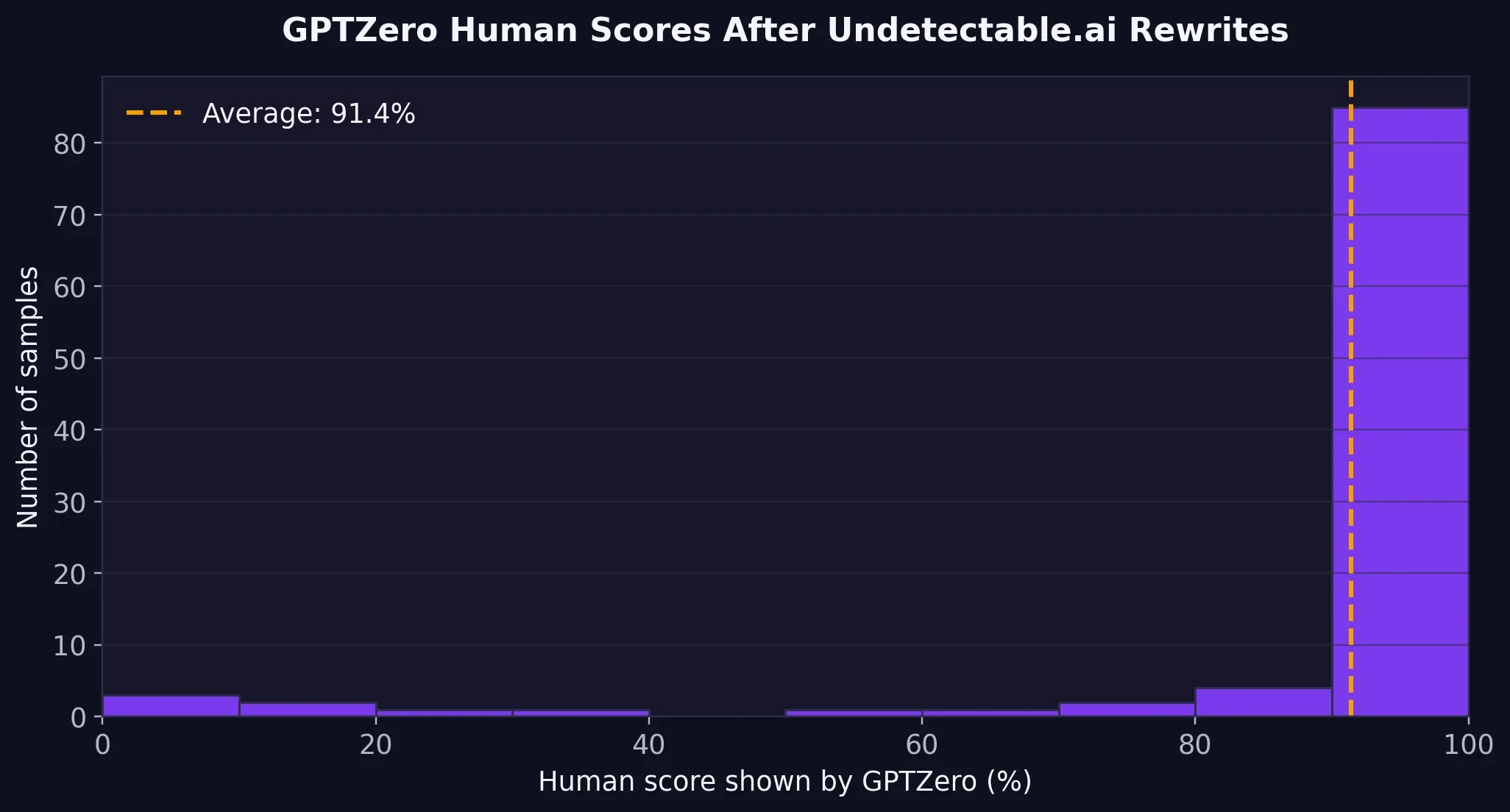
- Average human score: 91.39% across 100 rewritten samples.
- Median human score: 100%, meaning at least half the rewrites reached a perfect human score.
- Perfect scores: 64 out of 100 samples scored 100% human.
- Strong passes: 85 out of 100 scored 90% human or higher.
- Clear failures: 7 samples scored below 50% human, including 3 samples that scored 0% human.
The Big Picture: Undetectable.ai Usually Got Past GPTZero
The headline result is clear: Undetectable.ai was highly effective against GPTZero in this test. Most rewritten samples landed near the top of the human-score scale, and the average score was above 90%. For a student reading the numbers quickly, that might sound like a complete win.
But that would be too shallow. A detector score only tells us how a detector reacted. It does not prove that the writing is accurate, natural, or safe to submit. A rewrite can score as human and still sound awkward, change the meaning, or break the original structure.
Also Read: [STUDY] Can Undetectable AI Bypass Originality AI? A 100-Sample Reality Check
Where the Scores Landed
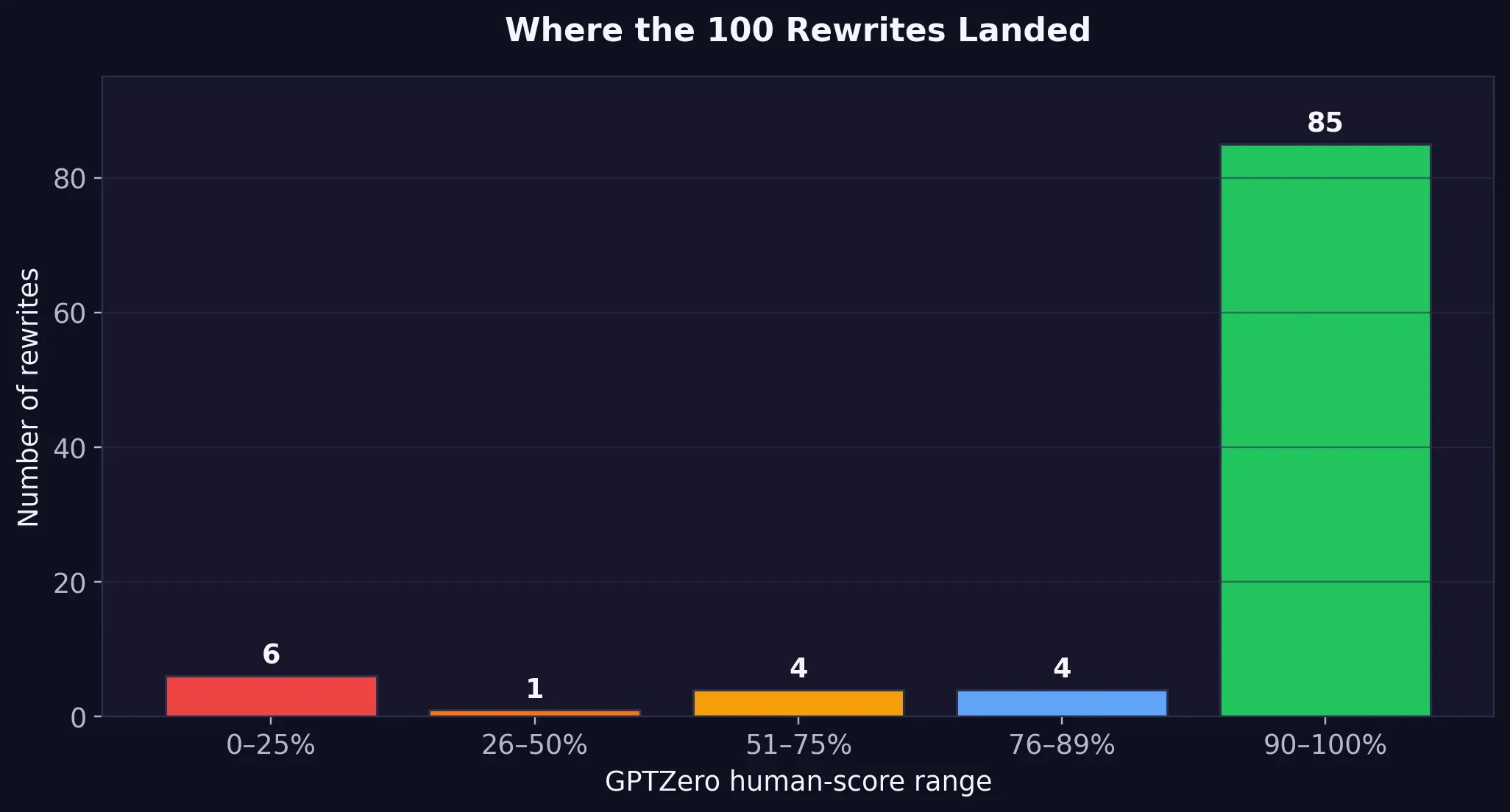
The score brackets show why the tool looks strong in a basic detector test. 85 samples landed in the 90–100% human range. Only 6 samples fell into the lowest 0–25% range. That gap explains why many users may feel that humanizer tools are reliable.
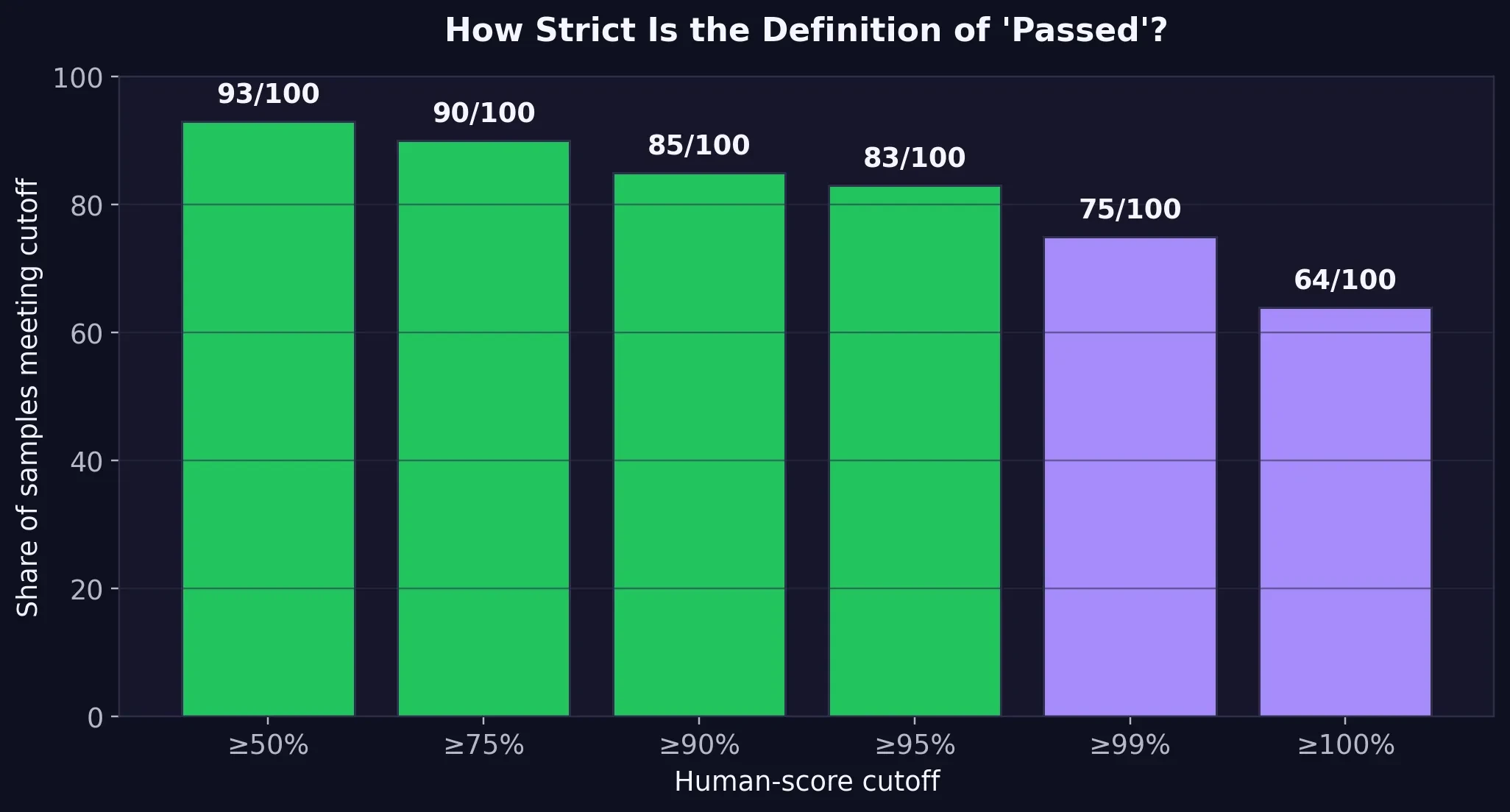
Still, the cutoff matters. If we call 50% human a pass, 93 out of 100 samples passed. If we demand 90% or higher, the pass count drops to 85 out of 100. If we only count perfect 100% scores, the number becomes 64 out of 100. Same data, different standard, different story.
The Hidden Trade-Off: Higher Scores, Messier Writing
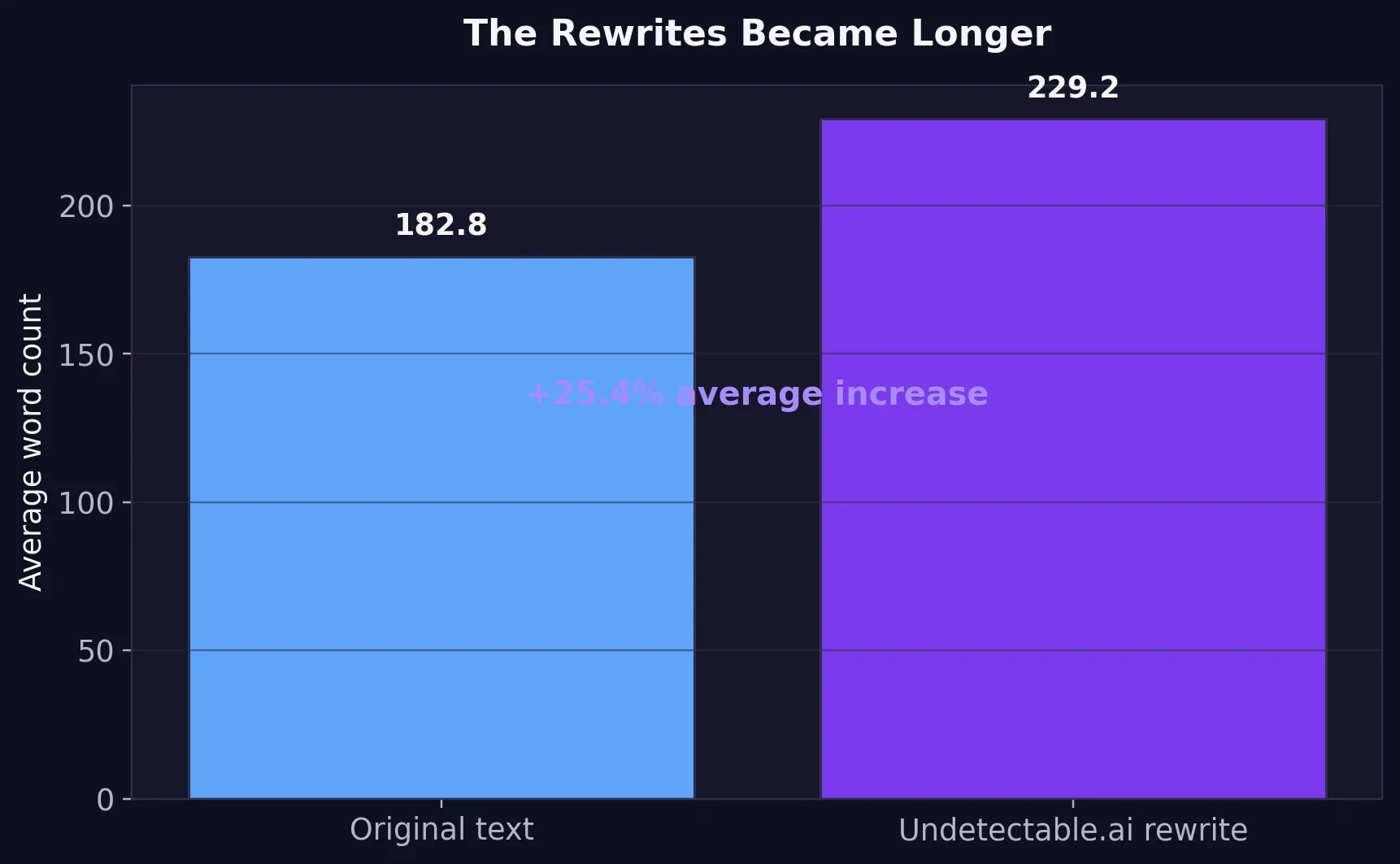
One pattern stood out during the quality review: the rewrites often became longer. The original samples averaged 182.8 words, while the rewrites averaged 229.2 words. That is a 25.4% increase. Longer writing is not automatically worse, but padding can make an answer feel less direct.
This matters because students are usually graded on clarity. A paragraph that passes a detector but loses focus can still hurt the final assignment. In some samples, the rewrite added extra wording without adding new meaning. In others, the rewrite shortened the passage so much that useful context disappeared.
Quality Audit: The Problems the Score Does Not Show
The most important part of this test was not the detector result. It was reading the rewrites themselves. Several problems appeared repeatedly, and these issues would be easy for a teacher, editor, or careful reader to notice.
- No real rewrite: One sample was copied almost exactly, and it received a 0% human score.
- Sentence glitches: Some rewrites contained broken phrases, missing spaces, or pasted fragments, such as scrambled openings and words fused together.
- Meaning drift: A few passages changed the original meaning or made claims stronger than the source text supported.
- Formatting problems: Numbered steps and section flow sometimes became messy, making instructional content harder to follow.
- Awkward repetition: Some rewrites repeated the same idea in different words, which made the text sound padded rather than natural.
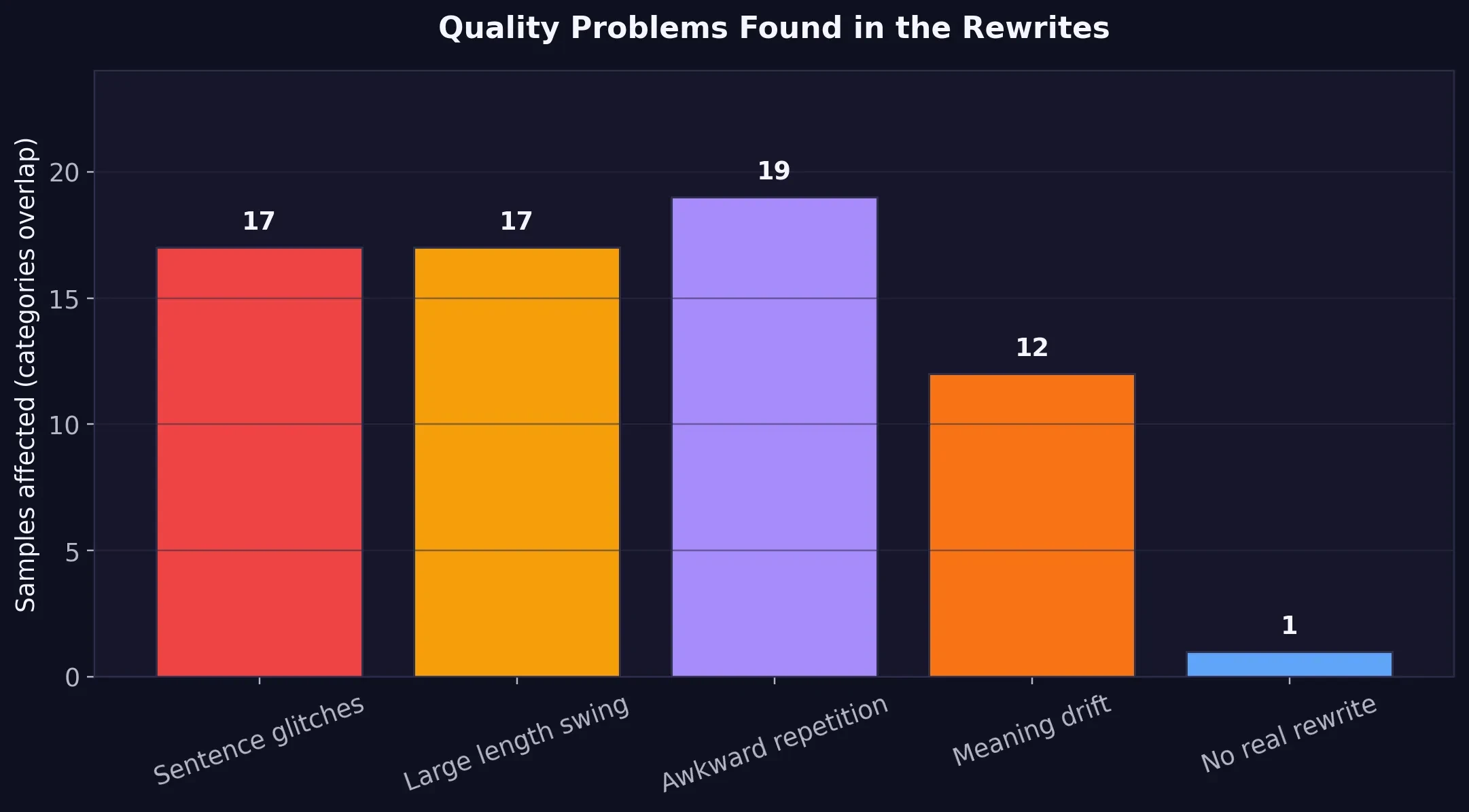
Examples from the audit included a battery-safety rewrite that opened with an incomplete phrase, a King Tut paragraph with scrambled dates and sentence order, and a GPS passage that repeated the same idea with a fused word. These are not tiny style preferences. They are the kind of errors that make readers stop and question whether the writer understood the topic.
Undetectable.ai in Action
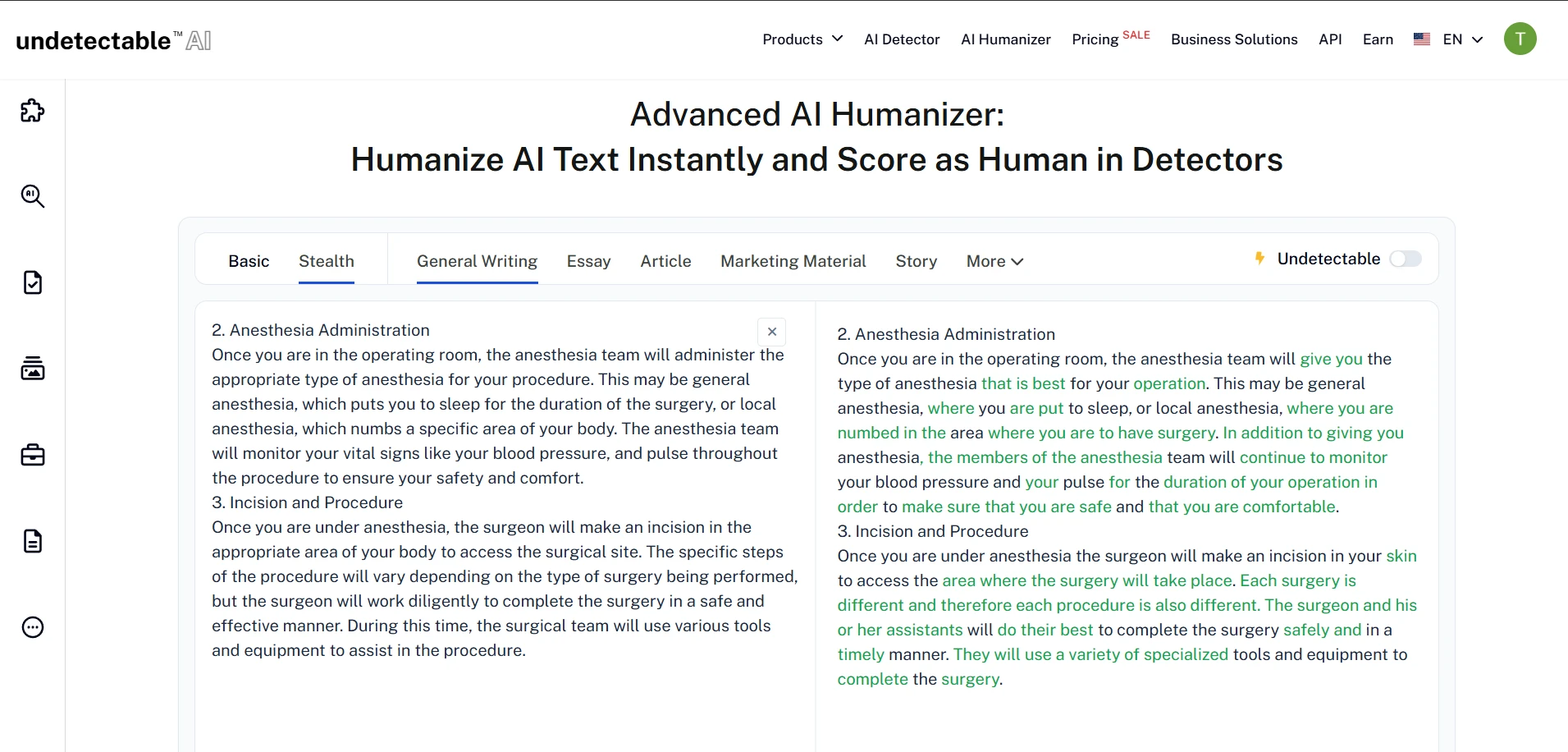
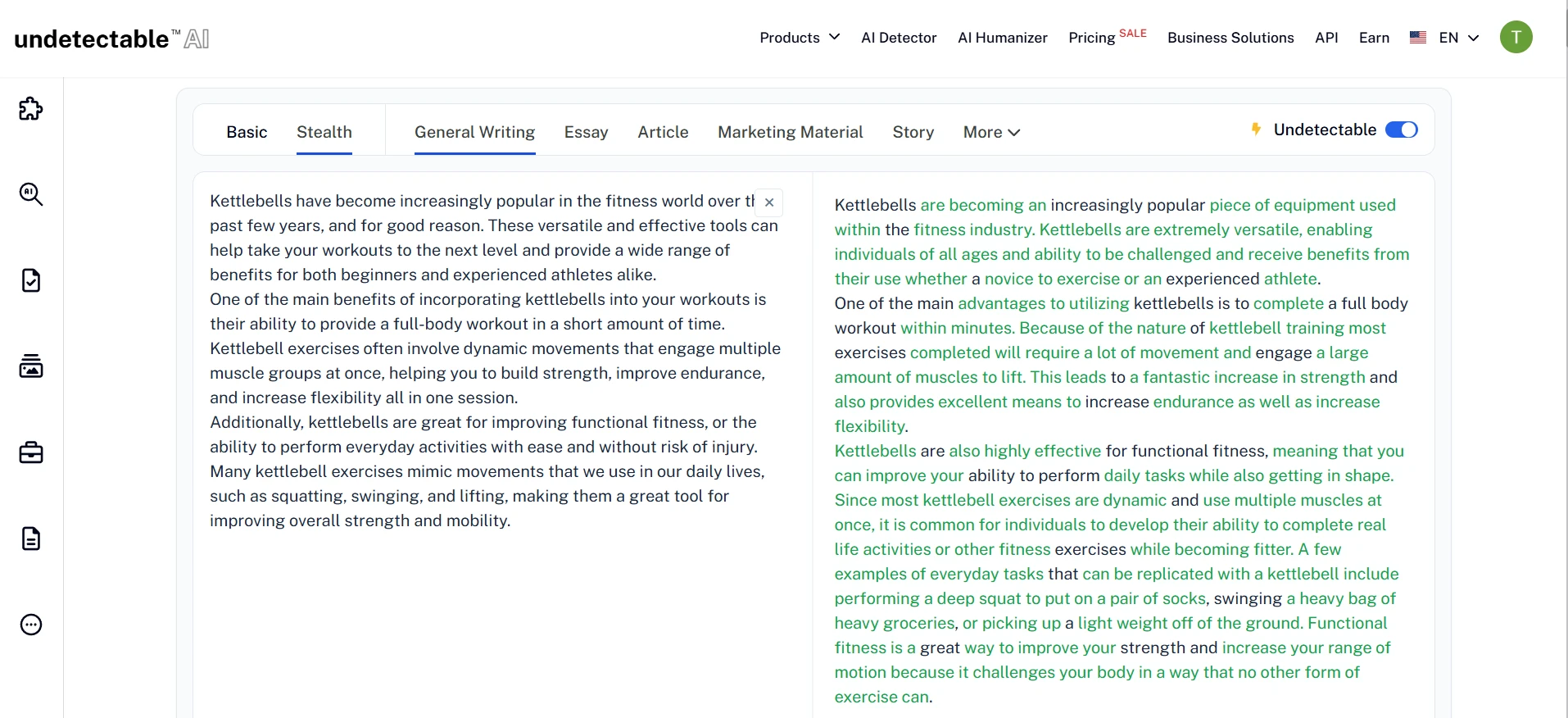
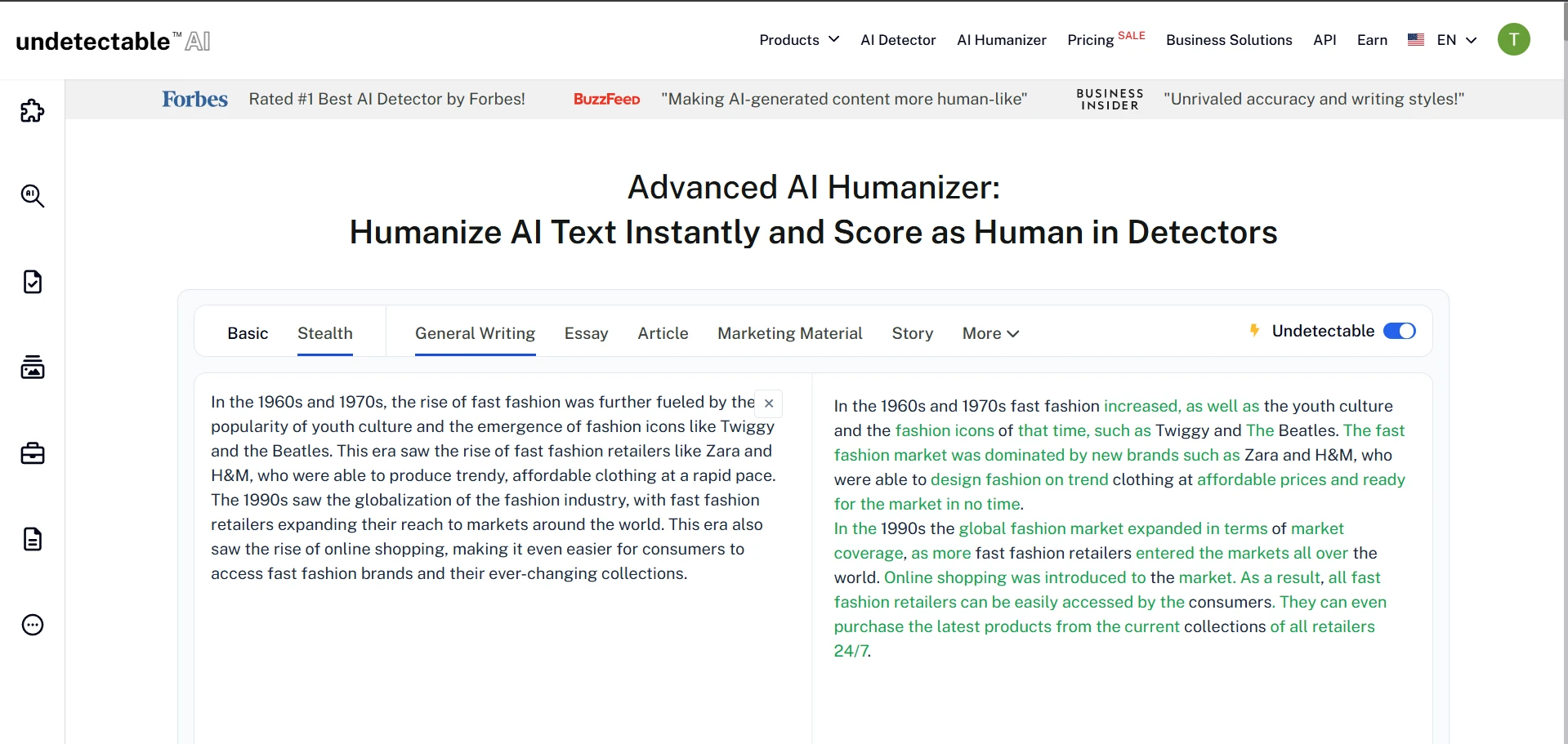
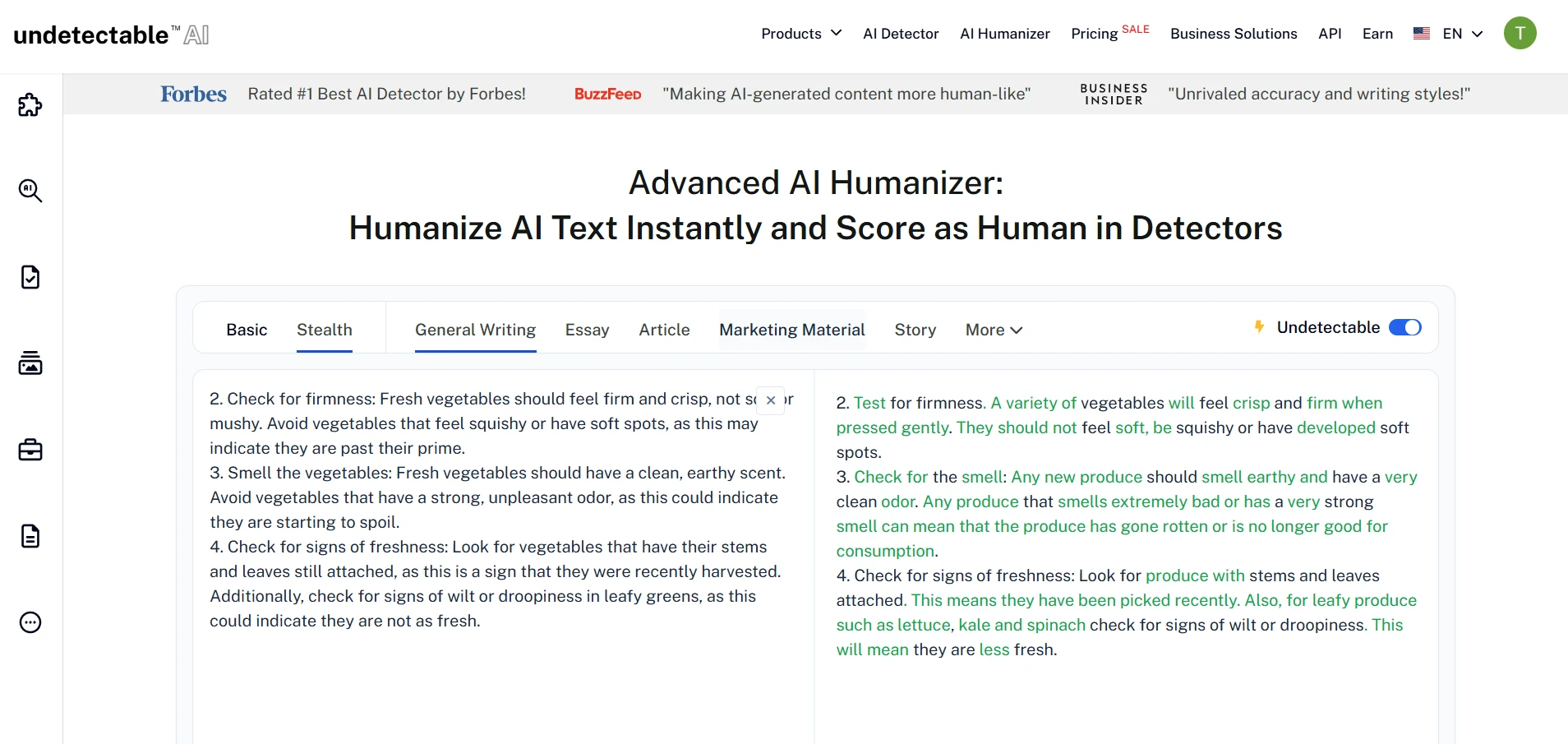
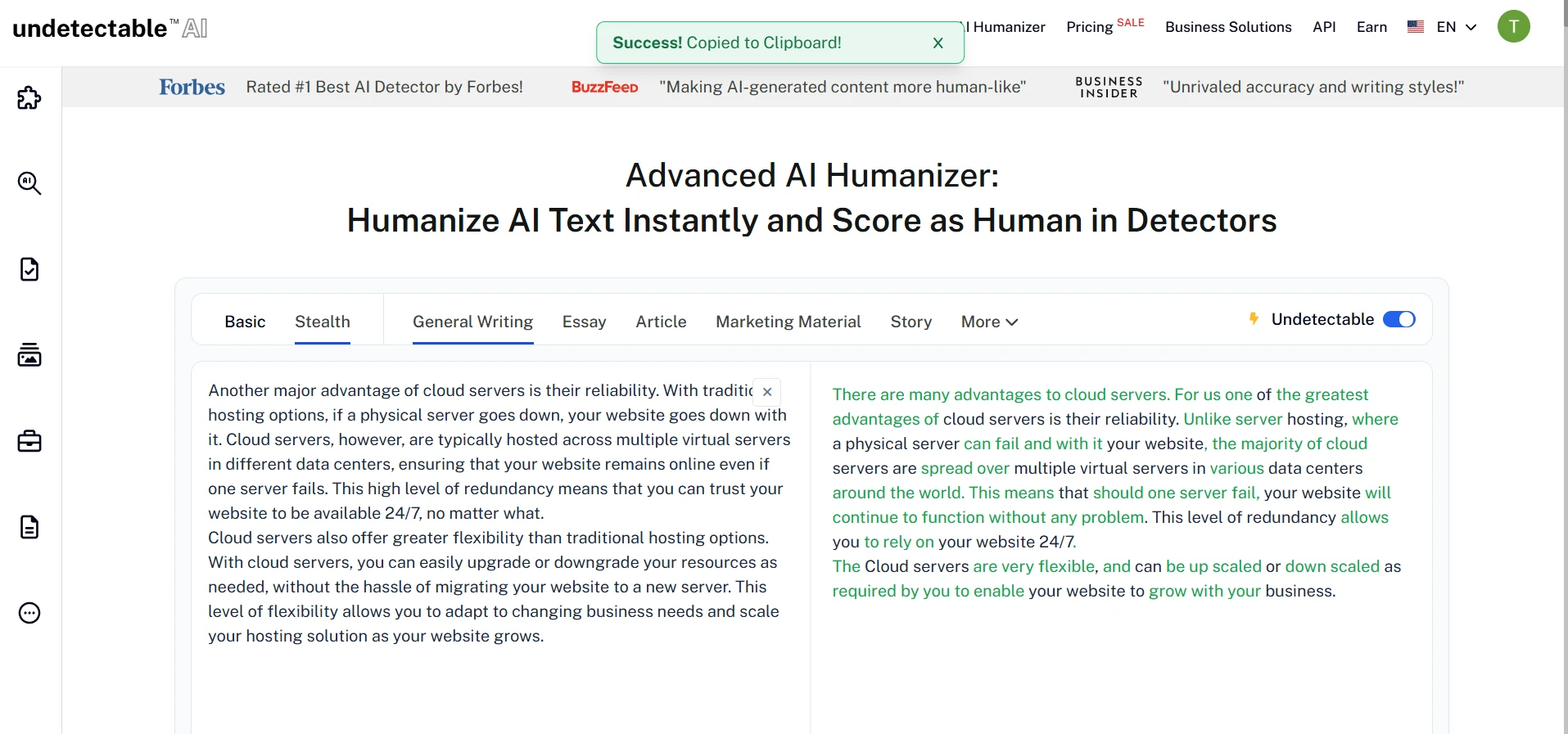
The Undetectable.ai interface produced fluent-looking rewrites in many cases, and the green-highlighted changes often appeared more conversational than the original. That likely helped many samples score well in GPTZero. However, “more human-sounding” is not the same as “better writing.”
GPTZero Results: Strong Scores, But Not a Guarantee
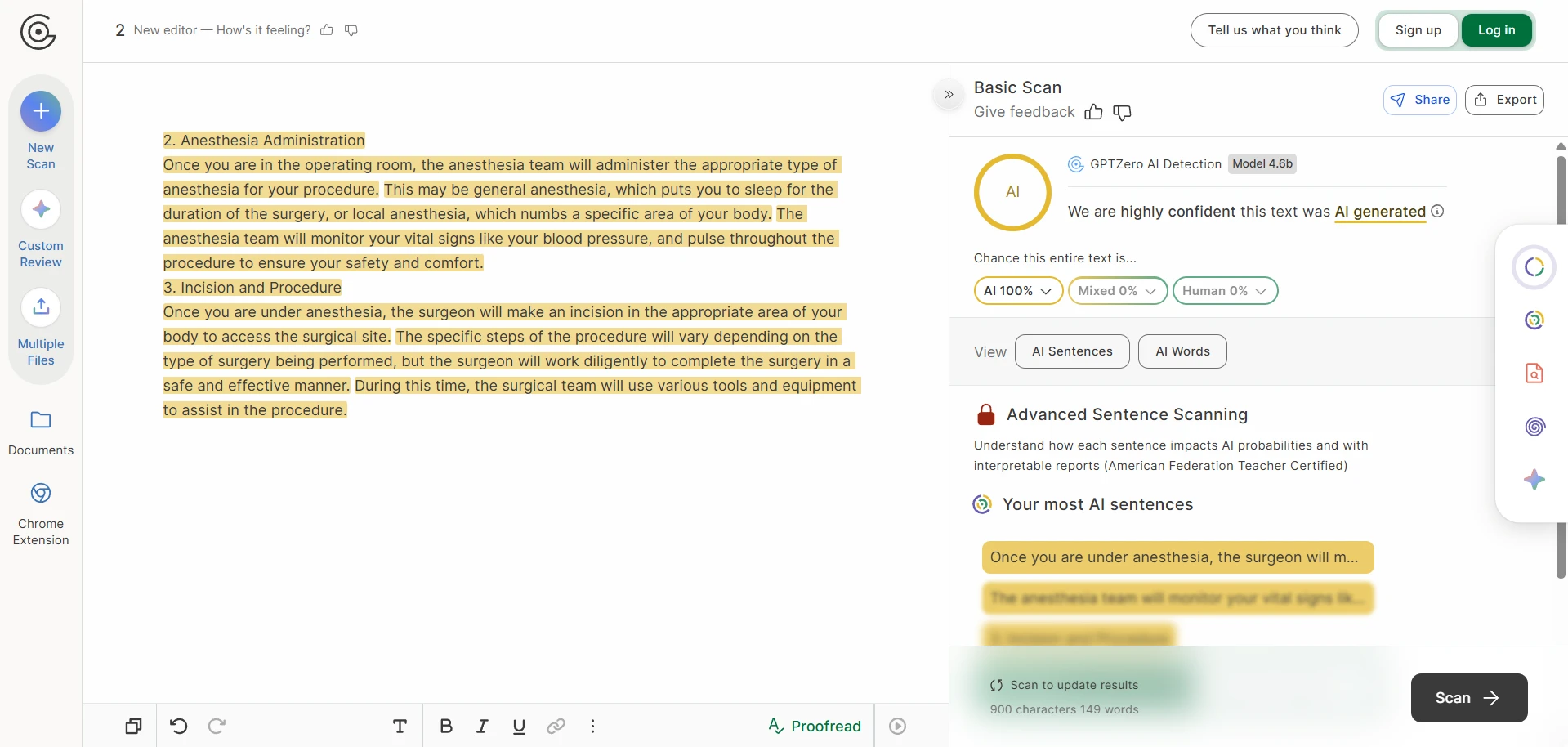
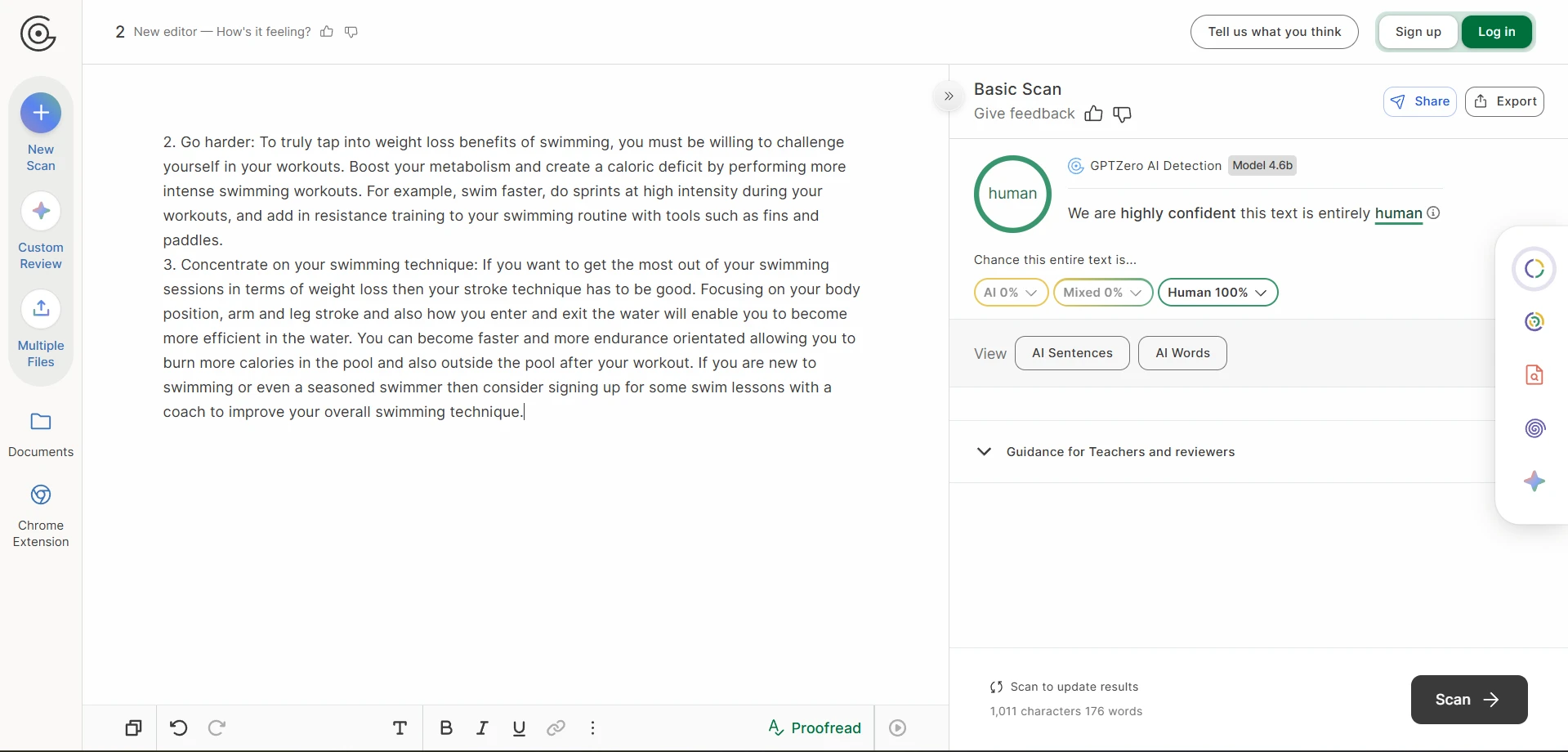
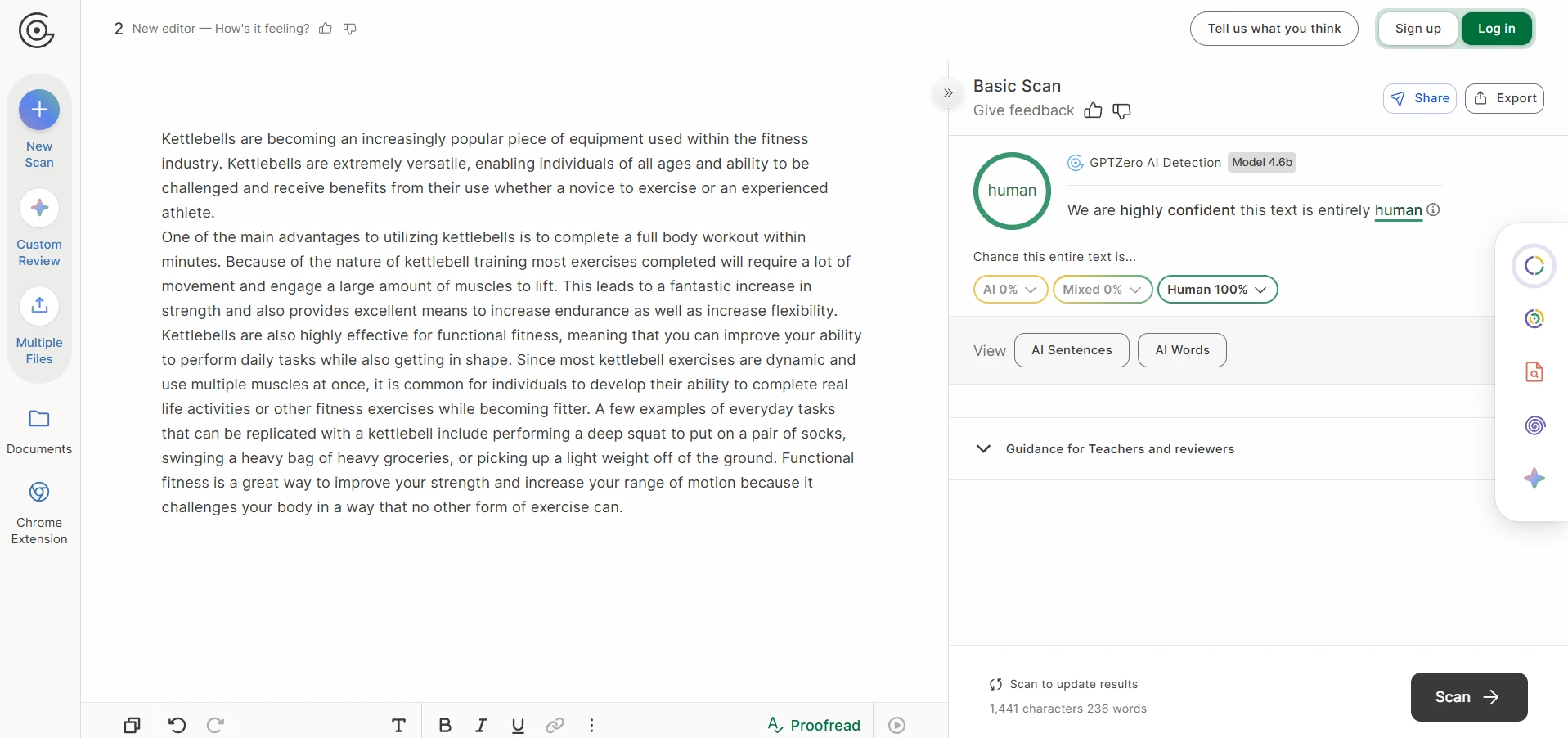
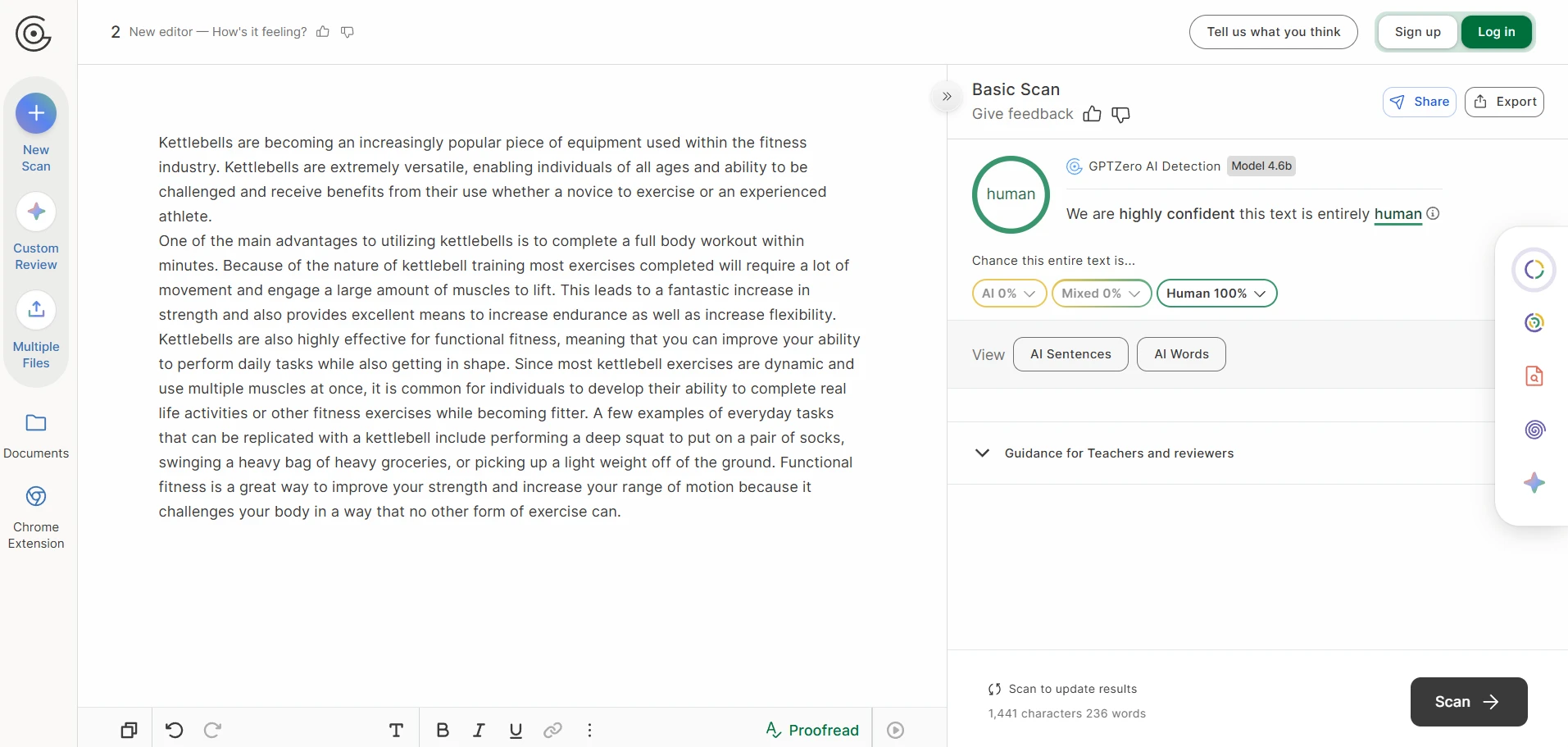
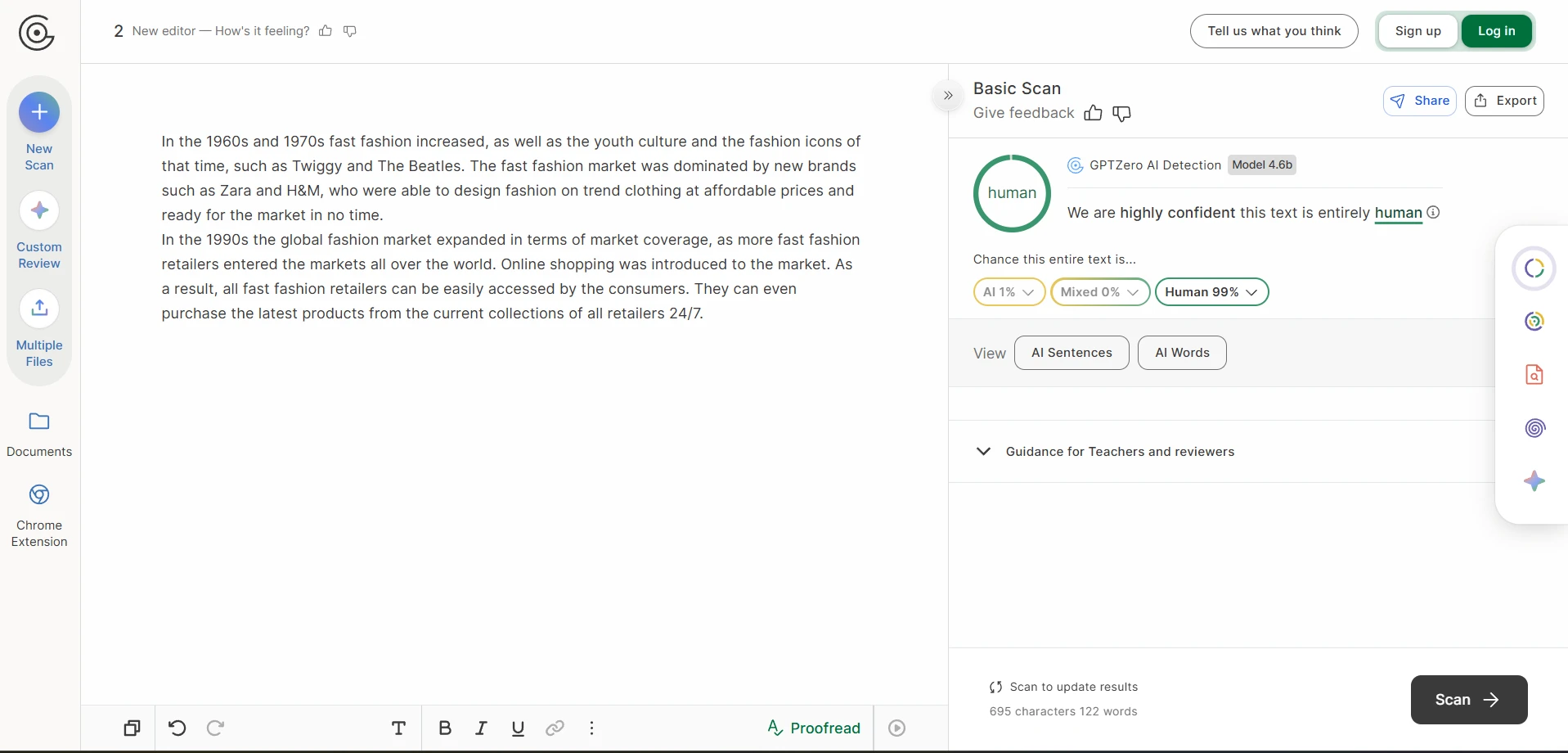
The GPTZero screenshots show both sides of the experiment. Some rewrites were labeled fully human, while at least one unchanged or poorly changed sample was still flagged as AI. This makes the result more realistic: Undetectable.ai performed well overall, but it did not produce a perfect shield.
Final Verdict: Effective, But Risky
Based on these 100 tests, Undetectable.ai was very effective at making rewritten text appear human to GPTZero.me. The average human score was 91.39%, and 85% of samples reached at least 90% human.
But the quality audit changes the takeaway. The tool did not only rewrite; it sometimes distorted, padded, scrambled, or weakened the writing. For students, the lesson is simple: a high detector score is not the same as strong work. Passing GPTZero may be possible, but passing a real reader is a different challenge.