![[STUDY] Is Copilot Detectable? - The Surprising Truth!](/static/images/is_copilot_detectablepng.webp)

As we all know it many people are now curious about whether Copilot can be detected by AI detectors or not. The short answer is YES. The longer answer is the devil lies in the details. Keep reading to know more about it.
Why Copilot gets detected by AI detectors?
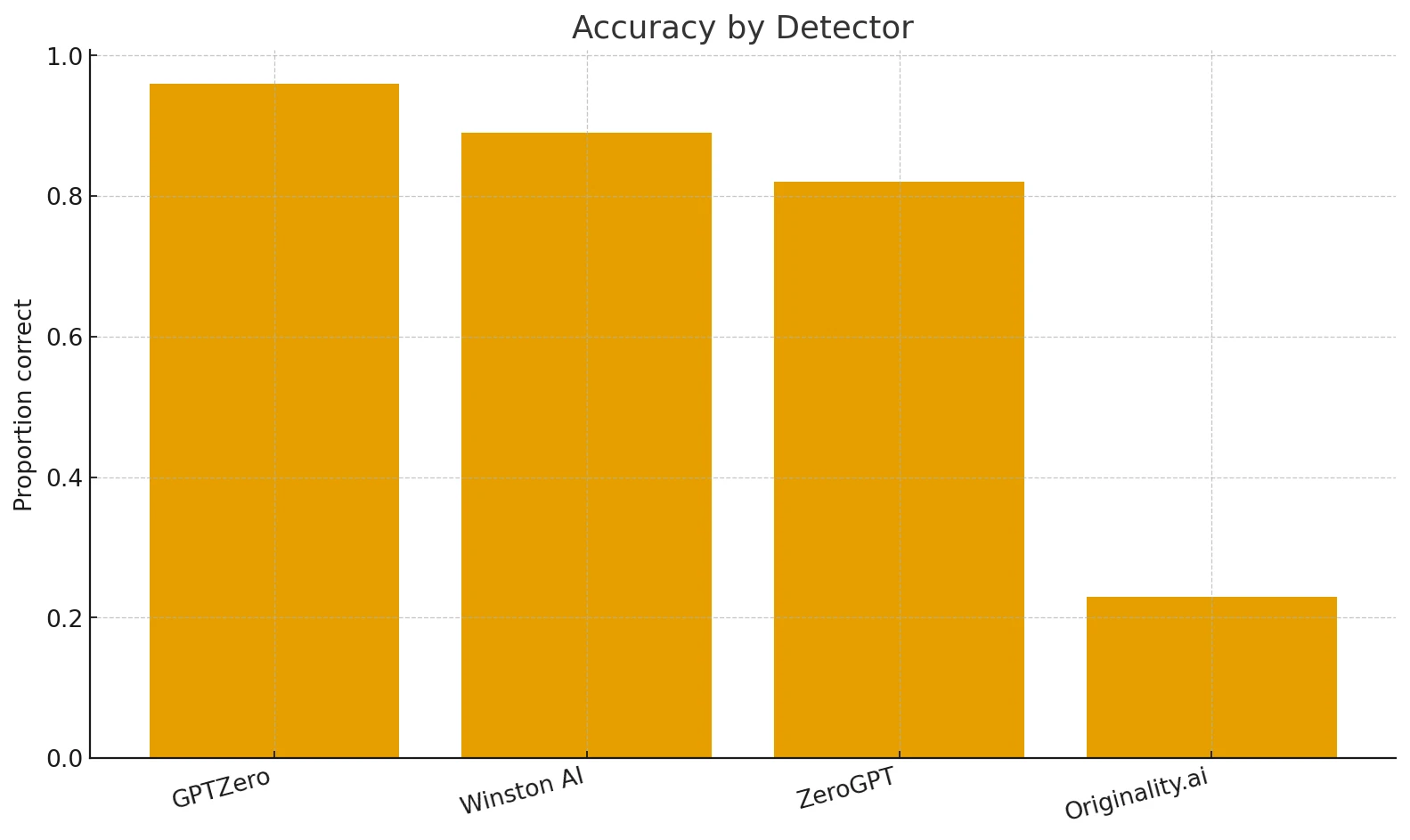
The simple answer is that these detectors don’t specifically look for Copilot, they look for AI-authored text in general. They have sophisticated ways of analyzing text, from measuring how “certain” a sentence structure is (often called perplexity) to checking word patterns that point to AI. Hence, if something is written by an AI—even if it’s Copilot—the detectors will try to catch it. In a recent experiment with 4 CSV files (each containing 100 text samples labeled as either AI or Human), it turned out that Copilot-written samples mostly got flagged by certain leading tools.
Also Read: Is Copilot Detectable By Originality AI?
What was tested?
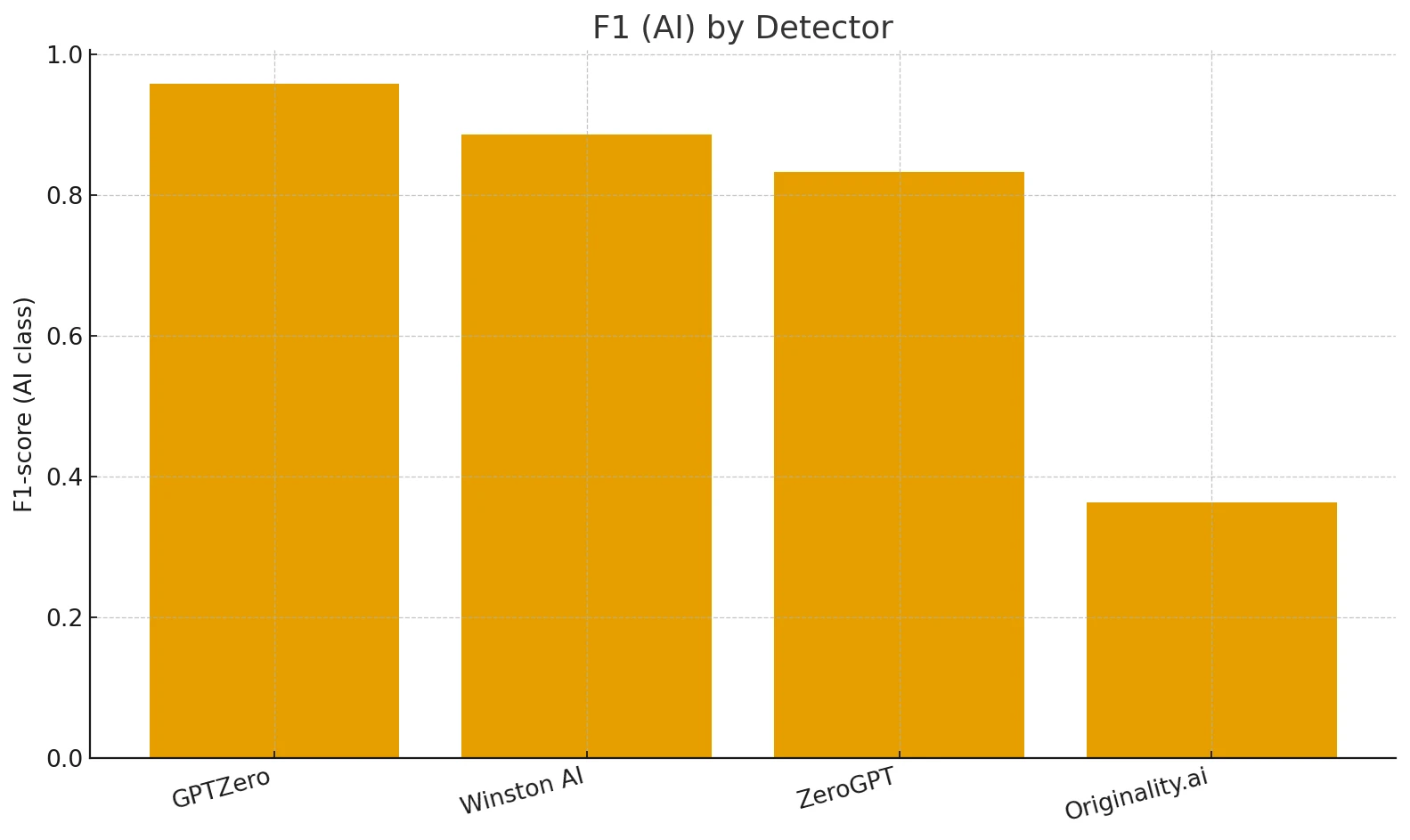
The testers had 4 datasets with 100 samples in each, evenly divided between Copilot (AI) and Human text. They looked at how four major detectors—GPTZero, Winston AI, ZeroGPT, and Originality.ai—performed when deciding if a text was AI or not. Each tool gave a label and sometimes a confidence score. Where a tool claimed “100% means human-only,” the testers inverted that to get an “AI-ness” score so that they could compare them side-by-side.
Also Read: Is Copilot Detectable by Winston AI?
What the results showed
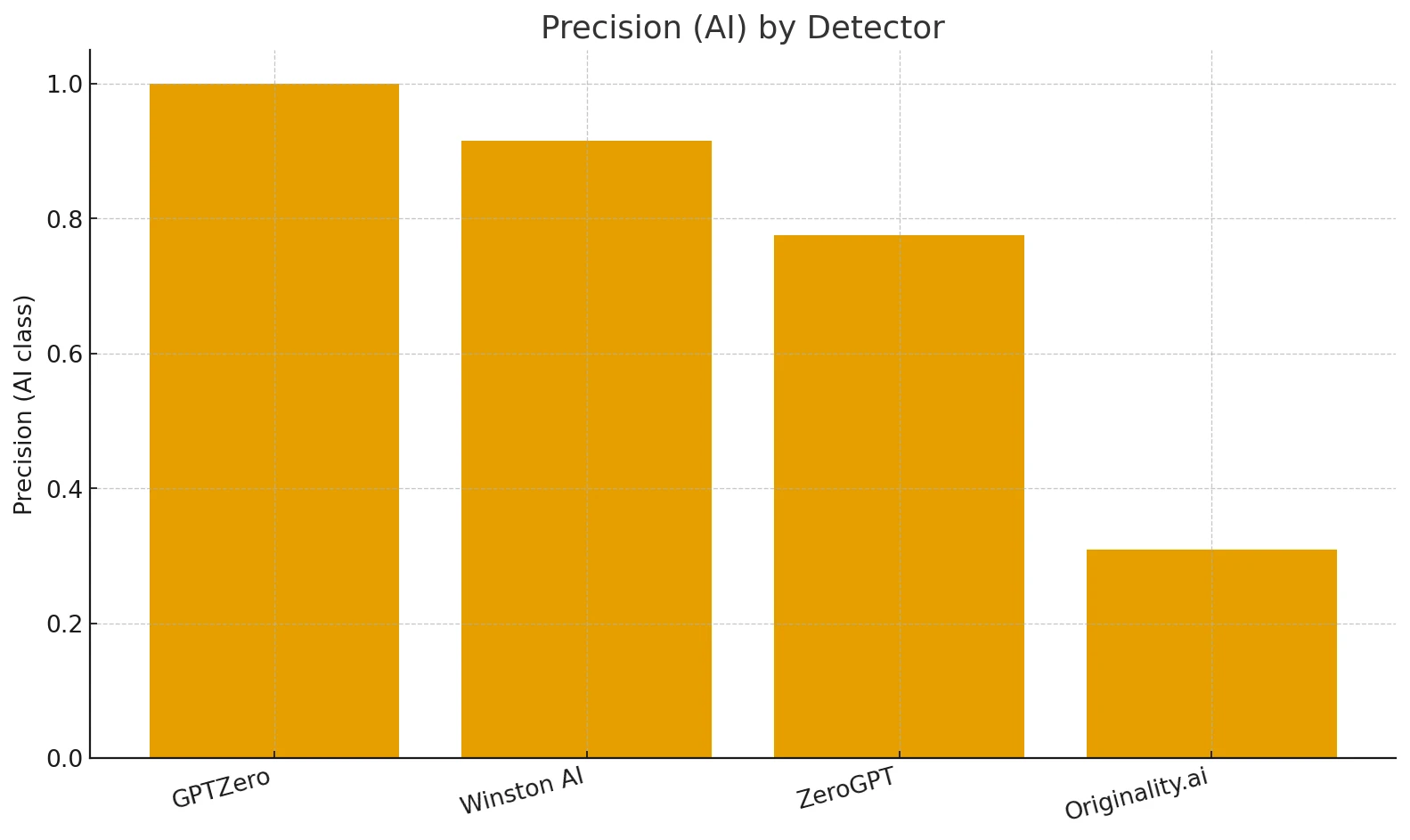
- GPTZero leads
- Accuracy was 0.96, meaning that out of 100 samples, it was correct 96 times.
- AI recall was 0.92, which means GPTZero correctly identified 92% of the Copilot texts as AI.
- It rarely flagged a human text as AI, so GPTZero is a good choice if someone wants to detect Copilot with minimal false positives.
- Winston AI
- Accuracy was 0.89, still quite good though slightly lower than GPTZero.
- AI recall was 0.86, catching most Copilot samples but missing a few more than GPTZero.
- ZeroGPT
- Accuracy was 0.82, with AI recall at 0.90.
- Its precision was lower, meaning it flagged more human texts as AI and might cause false alarms.
- Originality.ai
- Accuracy was a mere 0.23 on this dataset, getting only 23 out of 100 samples right on average.
- Possibly the version tested or the tool’s threshold wasn’t suited for these samples.
Also Read: Is Copilot Detectable by GPTZero?
Statistical terms explained simply
- Accuracy: How many times does the detector guess correctly out of all attempts?
- Recall: Out of all real AI (Copilot) texts, how many did the tool catch?
- Precision: Out of all times the tool said “This is AI,” how many were really AI?
Limitations to keep in mind
- Single dataset: This test was done on a specific set of 4 datasets with 100 samples each. Different topics, writing styles, or editing could change the numbers drastically.
- Tool versions & thresholds: AI detectors update fast, and even a small change in their threshold or version might flip their results.
- Detecting “AI” ≠ “detecting Copilot specifically”: These tools look for typical AI markers, not for Copilot’s “brand.” High recall only means they catch Copilot as AI, not that they can identify it as Copilot uniquely.
Also Read: Is Copilot Detectable by ZeroGPT?
Which tool is best?
Based on these samples, GPTZero is the clear winner. It can detect Copilot with minimal mistakes and rarely flags humans as AI. Winston AI follows closely and is a good bet for practical usage. ZeroGPT detects Copilot pretty well but might flag human text by mistake. Originality.ai performed very poorly on this dataset and might not be reliable in this scenario.
The Bottom Line
Considering these numbers, if someone absolutely has to rely on a tool to detect AI-generated text similar to Copilot, GPTZero and Winston AI appear to be the safest bets. However, it’s important to remember that AI detection is still a probabilistic game. It’s best to use multiple sources of evidence—like context and human review—rather than fully trusting just one detector.
Copilot is definitely detectable on this dataset, especially by GPTZero and Winston AI. They provide a strong signal in catching Copilot-generated text without too many false positives. But do keep in mind that these detectors are not perfect and might flag some human text or miss some AI. If anyone wants to be absolutely sure, the best way is to combine AI detection with proper oversight and to remember that results can vary greatly based on writing style, the latest tool updates, and the nature of texts being tested.